How to Add a ChatGPT Style Assistant to Your Website
Integrating an intelligent AI assistant into your site boosts conversions and handles support 24/7. Here is how to configure knowledge bases, guardrails, and custom LLM workflows safely.
Quick answer
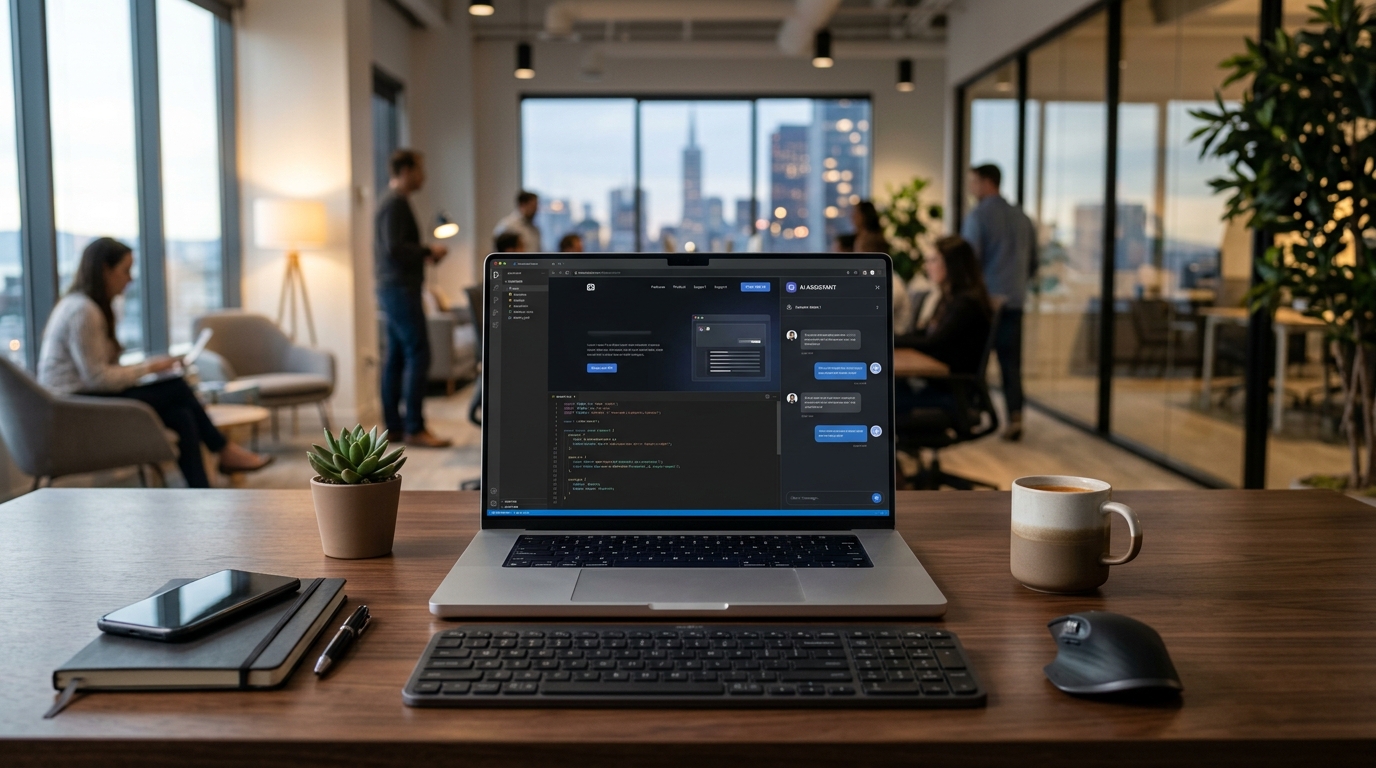
To add a ChatGPT style assistant to a business website, connect a large language model API to a retrieval-augmented generation (RAG) pipeline trained on your verified business documents. Implement strict system prompts and content moderation guardrails to prevent hallucinations, then embed a lightweight, responsive chat widget into your site's code for real-time customer interactions.
Frequently asked questions
How much does it cost to add a ChatGPT style assistant to a business website?
Costs vary depending on architecture. Simple API wrappers using retrieval tools generally cost between $500 and $2,500 for initial development, with ongoing monthly API fees under $50 for moderate traffic. Custom enterprise deployments with dedicated open-source LLM hosting carry higher setup and server costs.
Will a custom ChatGPT assistant hallucinate wrong information to my customers?
Without guardrails, general LLMs can fabricate answers. However, by using a Retrieval-Augmented Generation (RAG) system with a low temperature setting and custom fallback instructions, the AI assistant will strictly answer using your verified knowledge base documents.
Can the website AI assistant hand off conversations to a human agent?
Yes. Most custom AI website integrations include rule-based triggers that automatically alert human support representatives, open live-chat sessions, or send real-time notifications to your CRM when a visitor requests human assistance.
What is the difference between RAG and fine-tuning an AI model?
Fine-tuning modifies the internal weights of an existing AI model to adapt its tone or formatting style. RAG connects an AI model to an external, easily updated knowledge base without re-training the underlying model, making RAG faster, safer, and cheaper for website integrations.
Need help implementing this for your business? Talk to Glory Software Technologies.
Chat on WhatsApp