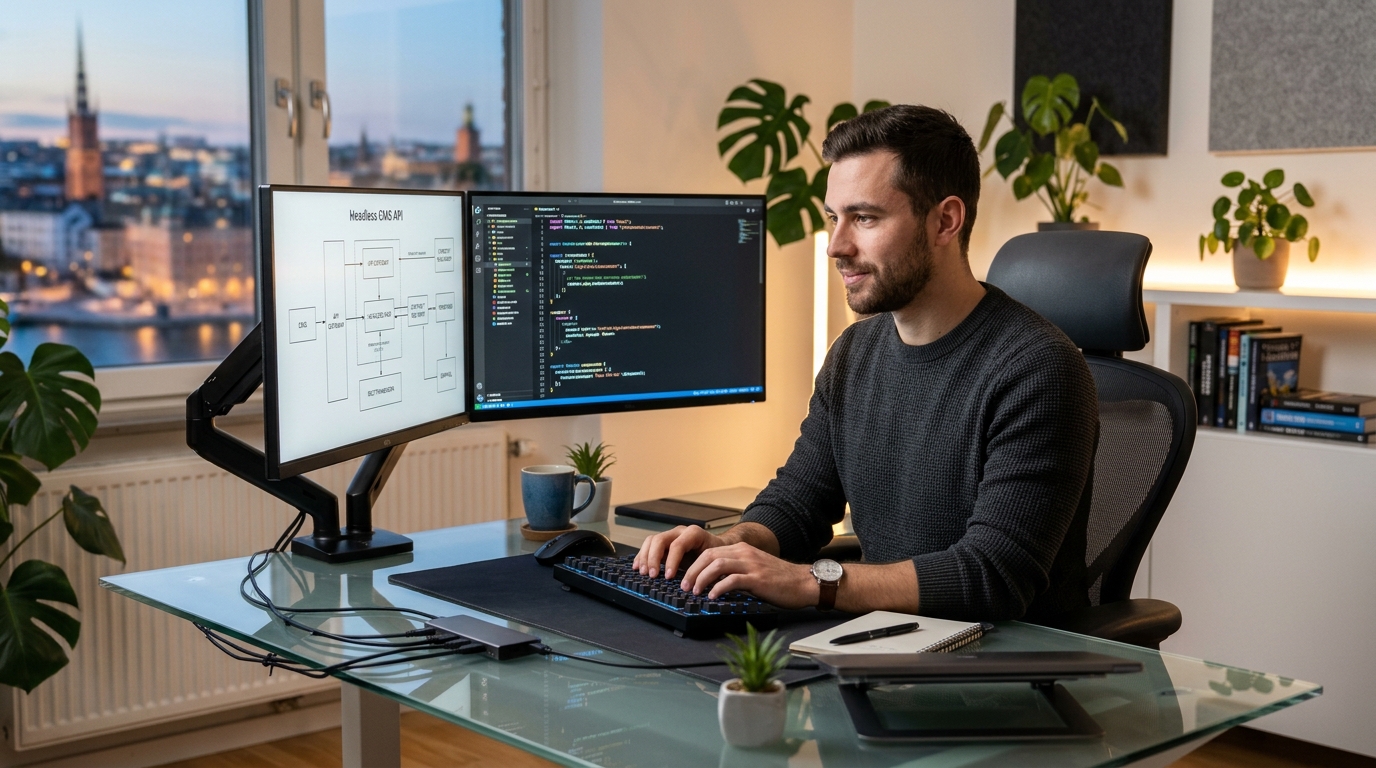
What Is Headless WordPress and How Does It Work?
In a standard WordPress installation, the content management backend and the frontend user interface are tightly bound together. When a visitor loads a page, WordPress dynamically queries the database, executes PHP code, and renders the HTML using your chosen theme.
By contrast, headless WordPress for small business decouples these two layers. WordPress acts purely as a content database (the backend), while modern frontend frameworks like Next.js, React, or Vue.js handle what visitors actually see. Content is fetched instantly via light REST or GraphQL APIs, delivering extreme performance and modern user experiences.
Top Benefits of Going Headless for Growing SMBs
Switching to a decoupled WordPress architecture offers several transformative advantages for growing businesses in India, the UK, and the USA:
- Unmatched Loading Speeds: Frontend frameworks render pre-compiled static pages, leading to sub-second load times and high Core Web Vitals scores.
- Ironclad Security: Because the WordPress admin area is hidden behind an API gateway, hackers cannot directly target your site's core database or plugins.
- Omnichannel Content Delivery: Publish content once in WordPress and distribute it seamlessly to web portals, mobile applications, or WhatsApp bots.
- Complete Design Freedom: Developers are no longer restricted by traditional WordPress theme files, allowing custom pixel-perfect UI creation.
Key Trade-Offs: Costs, Complexity, and Maintenance
While headless architecture delivers enterprise-grade performance, it is not always necessary for every website. Small business owners should weigh these considerations before making the transition:
- Higher Initial Investment: Custom frontend development requires specialized JavaScript expertise compared to installing off-the-shelf WordPress templates.
- Plugin Compatibility: Plugins that rely on frontend rendering (such as standard visual page builders or legacy contact form plugins) require custom API integrations.
- Ongoing Maintenance: You will need to maintain both the WordPress backend hosting and the frontend hosting environment.
If your team requires custom web components or managed support, exploring our managed retainers can help keep your headless infrastructure secure and updated effortlessly.
When Should Your Business Upgrade to Headless Architecture?
Not every SMB needs a headless setup immediately. You should consider transitioning to headless WordPress if:
- Your current site performance is throttled by heavy backend plugins and database bloat.
- You plan to launch a dedicated mobile app alongside your main website using shared content.
- Your target audience expects app-like speed, offline capabilities, or complex interactive web applications.
- Security is a top priority, especially when handling sensitive customer transactions.
For standard brochure websites, traditional custom themes built by our WordPress development services team may offer a more cost-effective balance of speed and simple content editing.
How Glory Software Technologies Helps You Scale
At Glory Software Technologies, we analyze your business goals, target audience location, and technical requirements before recommending an architectural stack. Whether you need custom Next.js frontend engineering or full-stack decoupling, our team builds scalable, future-proof web experiences.
Ready to evaluate whether headless WordPress is the right move for your digital presence? Contact Glory Software Technologies today for a free technical consultation.